
CEOs running ₹20–100 Cr+ organisations...
Get Back 15 Hours a Week and Recover 2–5% EBITDA Using a “KPI & Alignment System” That Turns Managers into Owners
Get Back 15 Hours a Week and Recover 2–5% EBITDA Using a “KPI & Alignment System” That Turns Managers into Owners
Watch teams resolve blockers themselves – so you finally step out of daily firefighting, even if KPIs, dashboards, and reviews haven’t worked before.
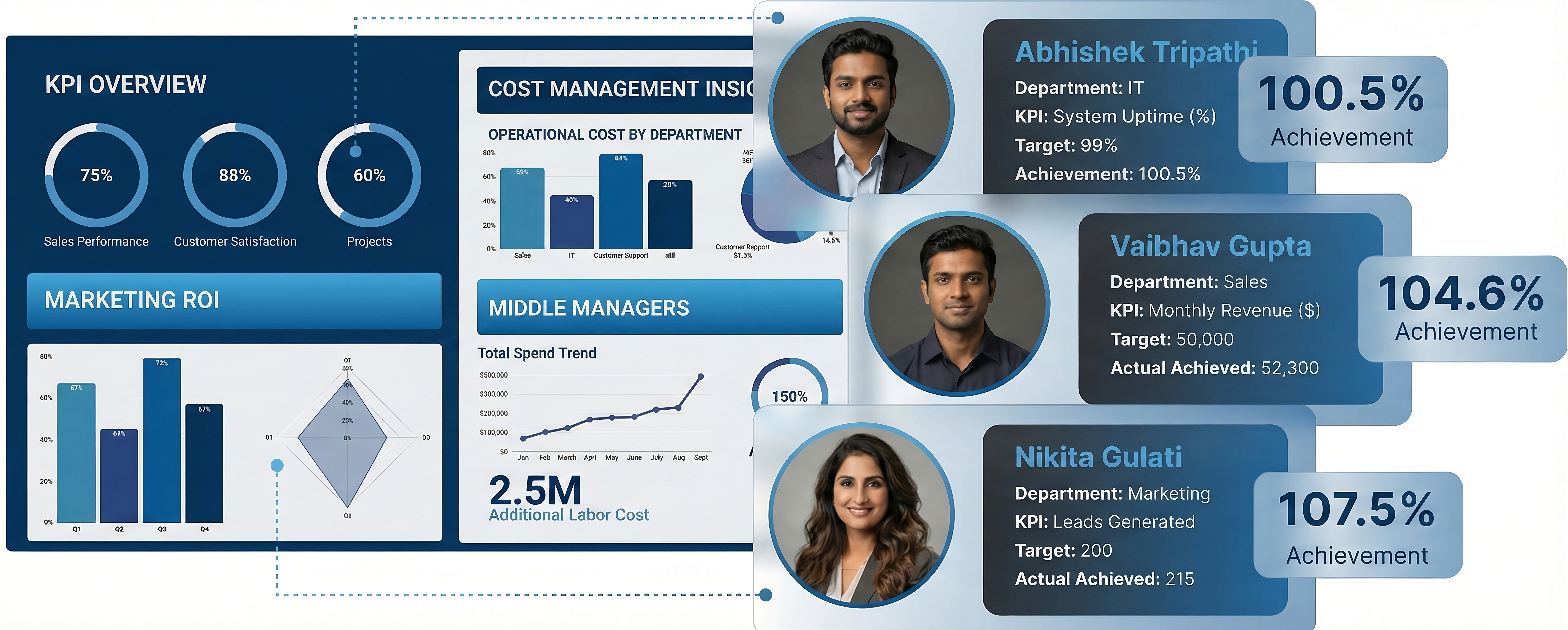
Dear CEO/Founder,
If you’re managing ₹20-100 Cr+ in revenue but spending 12–15 hours every week resolving cross-functional blame games – where nothing moves unless you intervene…
Understand that this isn’t happening because you hired the wrong people or failed to communicate clearly.
You've built something great with your vision and hard work. The problem is that your KPI system passes targets down the org, but it doesn’t pass down the authority needed to achieve those targets.
Hence every manager becomes a reporter instead of an owner. They escalate and wait for your approval instead of acting within defined boundaries.
And that turns you into the permanent bottleneck.
That bottleneck costs you 2-5% EBITDA every quarter - due to execution delays that no amount of communication, meetings, or dashboard reviews can fix.
Here's why this happens…
Most KPI Systems Were Never Built to Scale Authority
You've likely deployed some version of OKRs, balanced scorecards, or department-level dashboards.
These systems work well when your organisation is flat - when you can directly oversee 5-8 key people and decisions flow quickly.
But these frameworks collapse the moment you add layers.
OKRs pass targets down the org, but they don’t make it clear who has the power to decide.
Who approves vendor changes when Procurement and Sales disagree? Who decides credit limit exceptions when Finance and Operations conflict?
Dashboards surface data but don't assign resolution power. You see the problem. You know who's involved.
But nobody knows who has the authority to fix it without escalating to you.
Quarterly planning creates temporary alignment, but the moment priorities shift or cross-functional conflicts emerge, teams revert to escalation because the system never defined who owns what decision under which conditions.
This is not a people problem. It's an architectural problem.
Your best managers - the ones capable of running divisions independently - are trapped in a system that forces them to operate like project coordinators instead of decision-makers.
Hence every escalation that reaches you represents a decision that should have been resolved two levels down.
When Sales waits for you to push Procurement, that's 2-3 days of delay per issue. Multiply that across 15-20 escalations per week, across 12 weeks per quarter, and you're looking at hundreds of hours of organizational drag.
That drag doesn't just cost time. It costs margin.

Why Authority Gaps Drain 2-5% EBITDA (And Why It Compounds)
Let me show you the math on a ₹50Cr organisation:
2% EBITDA = ₹1 Cr. per year.
That's money lost to execution friction:
❌ Sales cycles stretch because approvals take 3-5 days instead of 3-5 hours
❌ Stockouts happen because Procurement can't act on demand signals without Finance sign-off
❌ Margin leaks through delayed pricing decisions because nobody below you has authority to adjust
❌ Strategic initiatives stall because cross-functional dependencies require your mediation
Here's what makes this expensive - it compounds as you scale.
When you were at ₹10Cr, you could personally manage 10-12 escalations per week. Painful, but manageable.
At ₹50Cr+, you're managing 20+ escalations weekly - and you're at capacity.
When you hit ₹100Cr+, the escalation load grows exponentially, because every new layer, every new function, every new geography adds decision dependencies that your current KPI system was never designed to resolve.
So the 2% EBITDA leak you're experiencing now becomes 3-4% as complexity increase - unless you fix the authority architecture that's causing it.
Most CEOs try to solve this by hiring more middle managers, adding communication tools, or running more alignment offsites.
None of that works, because the root problem isn't capacity, communication, or alignment.
The root problem is that your KPI system defines accountability for outcomes but not authority to resolve blockers.
And without authority, accountability is just theater.
Here’s an overview of my system:
The System That Closes the Authority Gap
What you need is not a better dashboard, a new OKR framework, or another round of role clarity workshops.
What you need is a KPI system that cascades decision rights, not just performance metrics.
Hi, I am Dinesh Rajesh - Director at Able Ventures and this is what we've built for complex org like yours.

Here's how it works:
Each manager owns specific decisions with clear limits. For ex: Sales Head can approve discounts upto 8% and extend payment terms up to 15 days without asking anyone. When inventory issues threaten deals over ₹5L, they contact Procurement directly.
Every manager knows exactly what they can decide alone, what needs approval from other departments, and what automatically comes to you. This removes confusion about who decides what.
This clarity cuts escalations by 70-80%. Managers know when to act independently and when to involve their colleagues from other departments.
When two departments affect the same outcome, they share the metric. Sales and Procurement both track "revenue lost due to stockouts" and work together to fix issues within agreed limits before escalating.
Since teams work together, they can't blame each other – either they both win or they both lose. This pushes them to solve problems instead of defending their positions.
Managers report what they decided, what they fixed, and what needs your involvement. Instead of "Sales is down 15%" you hear "Sales is down 15% because procurement delayed a vendor. I escalated as required, and it'll be resolved by Friday."
We don't eliminate politics - we channel it. Your senior managers embrace instead of resisting. Because for the first time in their careers they know what they own, what they can decide and when to escalate.
Case Study: How a ₹50Cr Textile Manufacturer Cut Escalations by 80% in 90 Days
A leading textile manufacturer came when the production kept missing deadlines.
Sales blamed procurement. Finance stalled credit approvals. And the CEO was burning 15-20+ hours every week cleaning up cross-functional messes. KPIs existed – but nobody understood them. Monthly reviews were pure blame games.
We rebuilt their entire KPI engine. We created CEO-level KPIs tied to revenue and margins, cascaded them into 14 department scorecards, and got every HOD to sign off on crystal-clear measurement criteria.
Then we installed monthly scorecards and review rhythms that exposed blockers instantly.
In 90 days, firefighting dropped to 2–3 hours a week. Escalations vanished. Teams started collaborating instead of blaming. Reviews turned into root-cause problem-solving. And the company unlocked lakhs worth of productive hours – without the CEO’s involvement.
Why Current Approaches Can't Fix This
Let me address the obvious question: why can't you just implement this yourself using OKRs, better dashboards, or role clarity workshops?
Because the problem isn't knowing what to do - it's having the external authority and structure to enforce it.
Here's what happens when CEOs try to fix authority gaps internally:
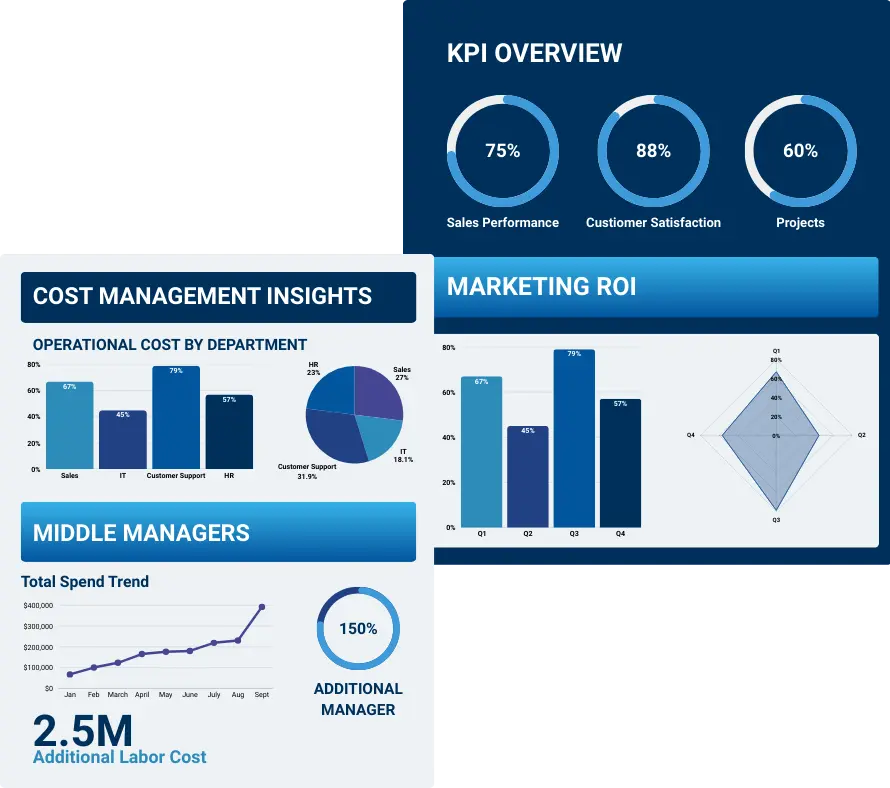
You run workshops, update job descriptions, communicate expectations clearly. But nothing changes, because the issue wasn't clarity - it was that managers don't trust they have authority to act without political consequences.
You cascade objectives, create alignment, track progress. Goals are clear, but decision rights remain undefined. Managers still escalate because they don't know where their authority ends.
You hire more middle managers hoping it reduces your load. But it adds more escalations because you've added layers without adding decision clarity.
You invest in tools software that surface data faster. You see problems quicker, but resolution speed doesn't improve because authority to act hasn't changed.
The reason these fail is simple: you can't grant authority to your own direct reports without creating perceived favoritism, political risk, or organizational resistance.
When an external system — backed by data, benchmarks, and documented frameworks — defines authority boundaries, managers accept it because it's perceived as neutral and structural, not political.
That's why this works when we deploy it, and why it fails when you try to implement it yourself.
Here’s how it works step by step:
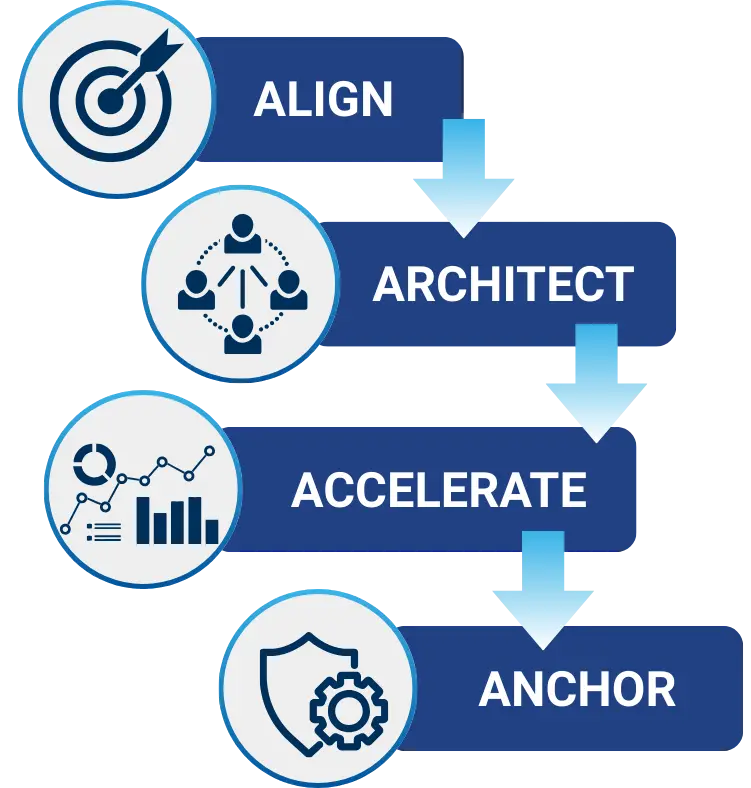
The 90-Day "KPI Authority Deployment System"

THE ALIGNMENT AUDIT
We uncover where teams are
misfiring and why execution
keeps stalling
We figure out where things break down and why work isn't moving forward

● We map your current KPIs to strategic goals – exposing execution leaks you didn’t realise were costing multiple crores.
● We identify where priorities conflict between departments – resulting in immediate clarity on what matters most and who owns what
Here's what will be uncomfortable initially: Your senior managers will need to face data they've been avoiding. Some will resist transparency. But this is exactly why the system works – it surfaces problems your org has been navigating around.

KPI ARCHITECTURE
We build a custom
KPI system linked directly
to outcomes
We build a custom KPI system linked directly to outcomes
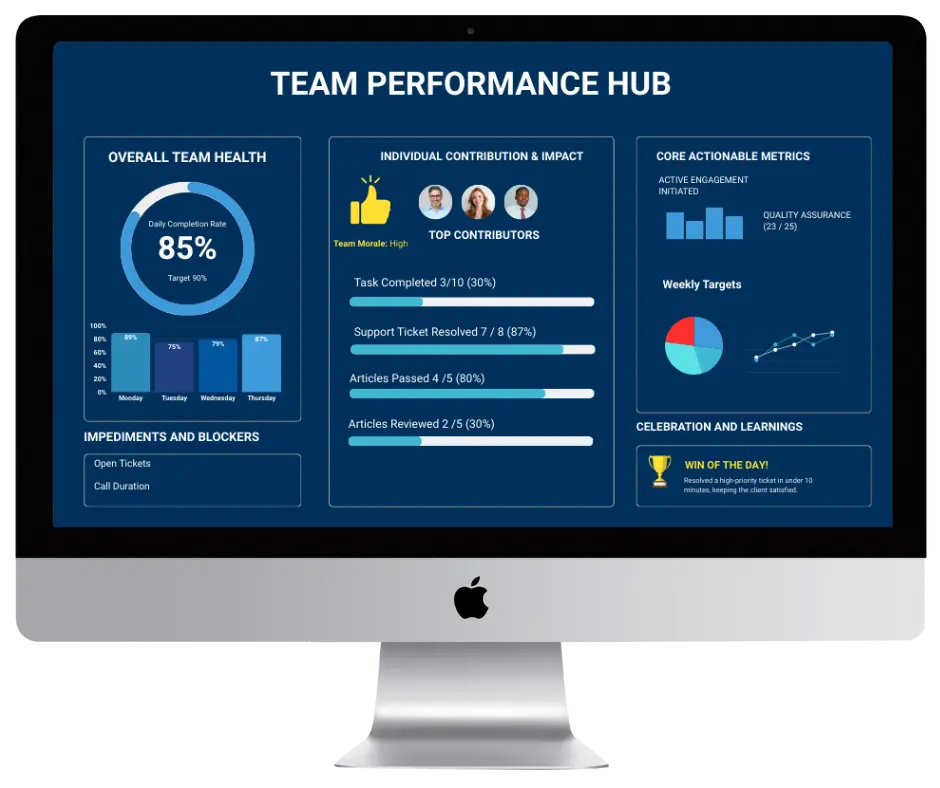
● We replace bloated dashboards with “actionable metrics” that drive daily behavior – and so, you will get a team that knows exactly what success looks like
● We create accountability maps for every manager – that’s why, what you see is ownership rising and escalations dropping fast.
Here's what your managers will resist: Being held to numbers instead of narratives. In Indian orgs, relationships often trump metrics. We work with that reality – but add structure that makes performance visible without destroying trust.

EXECUTION ENGINE
We set up weekly reviews that actually work as you grow
We implement weekly
reviews and performance
rhythms that scale

● We train leaders to use data to drive execution and that’s why you walk into meetings surprised by progress instead of babysitting projects
● We build cross-functional sync routines – this ultimately results in departments working together instead of pulling in different directions
Here's why this works even in Indian orgs with politics: We don't eliminate politics – we channel it. When everyone sees the same scoreboard, competition becomes productive. Silos start collaborating because their KPIs demand it.

OWNERSHIP ANCHORING
We tie KPIs to appraisals, promotions, and compensation
We tie KPIs to appraisals,
promotions, and compensation
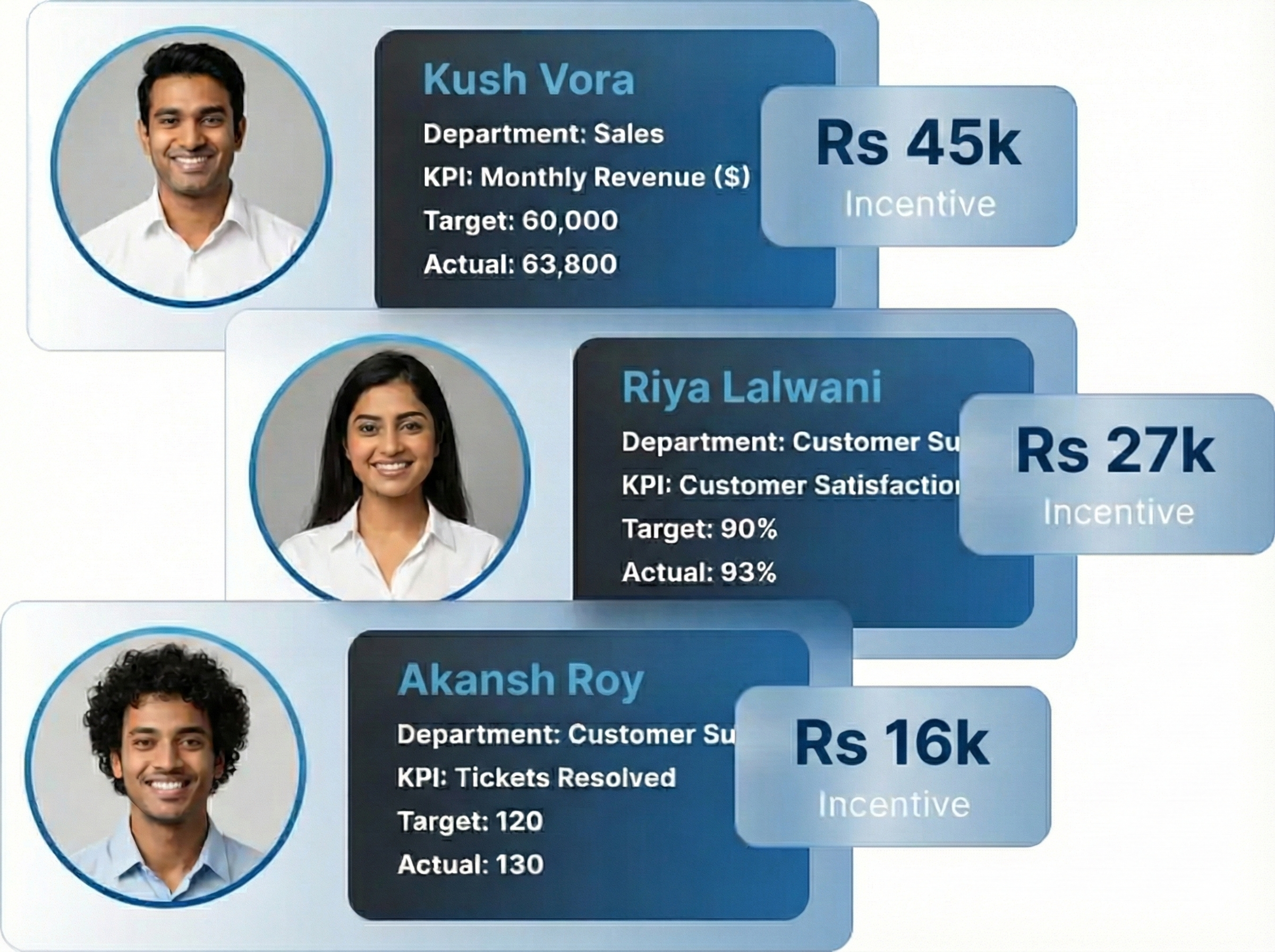
● We hardwire accountability into your culture – and that’s why you stop being the glue holding everything together
● Your role drops from 12 to 15 hours a week of escalation work to 2–3 hours of strategic oversight – because teams finally own outcomes end-to-end.
CASE STUDY 2: How a Fertilizer & Biostimulants Company Streamlined 40+ KPIs Into 5–7 High-Impact Metrics Per Role
Org was expanding into new zones, but execution kept collapsing. They had 40+ scattered KPIs, shifting targets, and little alignment.
Quarterly reviews turned into opinion fights. Sales blamed Ops for stock-outs, Ops blamed R&D for delays, and leadership had no objective data to drive decisions.
We rebuilt their KPI system using industry benchmarks, cutting role KPIs down to 5–7 measurable metrics tied directly to strategic priorities – margin improvement, product innovation, and geographic expansion.
Every KPI received a quantified formula, owner, data source, and sign-off. We then integrated it into their PMS, automating reviews and scorecards.
Within weeks, review time dropped by 40%, cross-functional conflicts reduced sharply due to joint metrics, and teams finally understood how daily activities drove company goals. Execution became objective, transparent, and fast.
Walk Into Leadership Meetings Surprised by
Progress You Didn’t Have to Push
Walk Into Leadership
Meetings Surprised by
Progress You Didn’t
Have to Push
Every department stays aligned and you see exactly what's happening in real-time
Your leadership team owns outcomes, not activities – creating measurable progress every week
This gives you strategic freedom as CEO – the ability to focus on vision instead of operations
You see visible traction on growth goals without chasing updates
Decision bottlenecks reduce across departments
Teams move fast without waiting for your input on every decision
So here’s a RECAP of everything you’re getting…
So here’s a RECAP of
everything you’re getting…
You uncover exactly where your teams are misaligned and which KPIs are blocking progress
This happens in one focused diagnostic session analyzing your goals, org structure, and performance metrics
You get function-level KPIs tied directly to revenue, margins, and efficiency
Every department aligns around select few outcome-driving KPIs that actually move the needle
You'll finally see why execution stalls even with smart people – and fix the root cause
Your managers stop escalating every decision and start owning outcomes – because they know exactly what they're responsible for and how success is measured
Leadership meetings turn into high-impact strategy sessions using a weekly review rhythm that drives clarity and accountability – without micromanagement
You reclaim time for visionary growth, walk into meetings surprised by progress, and scale without chaos or burnout
CASE STUDY 3: How a Maritime & Oceanography Firm Fixed Broken Roles, Created 20+ Crystal-Clear JDs & Installed Measurable KPIs in 45 Days
Management approached us with a serious execution gap. Their job descriptions were vague, outdated, and unusable for hiring — and 0% of roles had measurable KPIs. Managers couldn’t evaluate performance, HR couldn’t hire accurately, and employees had no clarity on expectations.
We conducted role-wise analysis across the org, interviewing role holders and managers to map responsibilities, decision authority, and skill requirements.
From this, we created 20+ fully detailed, audit-ready Job Descriptions and built 5–7 quantified KPIs per role with rating scales, measurement criteria, and ownership. Each KPI was tied directly to business goals.
In 45 days, the hiring accuracy improved, performance reviews became objective, and managers finally had measurable standards to drive accountability.
This resulted in a complete JD–KPI system that eliminated guesswork and aligned every role to organisational outcomes.
Build a company that runs without you – by aligning every department around select few KPIs that unlock thousands of hours in productivity, recover 2–5% in EBITDA, and free you from almost all day-to-day operational decisions.
Build a company that runs without you – by aligning every department around "select few KPIs" that unlock thousands of hours in productivity, recover 2–5% in EBITDA, and free you from almost all day-to-day operational decisions.
TESTIMONY (IF ANY)
LOREM IPSUM
Lorem Ipsum is simply dummy text of the printing and typesetting industry.
LOREM IPSUM
Lorem Ipsum is simply dummy text of the printing and typesetting industry.

LOREM IPSUM
★ ★ ★ ★ ★
Lorem Ipsum is simply dummy text of the printing and typesetting industry. Lorem Ipsum has been the industry's standard dummy text ever since the 1500s, when an unknown printer took a galley of type and scrambled it to make a type specimen book. It has survived not only five centuries, but also the leap into electronic typesetting, remaining essentially unchanged. It was popularised in the 1960s with the release of Letraset sheets containing
LOREM IPSUM
★ ★ ★ ★ ★
Lorem Ipsum is simply dummy text of the printing and typesetting industry. Lorem Ipsum has been the industry's standard dummy text ever since the 1500s, when an unknown printer took a galley of type and scrambled it to make a type specimen book. It has survived not only five centuries, but also the leap into electronic typesetting, remaining essentially unchanged. It was popularised in the 1960s with the release of Letraset sheets containing
Click the button below to book a quick call
There are many variations of passages of Lorem Ipsum available, but the majority have suffered alteration in some form, by injected humour, or randomised words which don't look even slightly believable.
If you are going to use a passage of Lorem Ipsum, you need to be sure there isn't anything embarrassing hidden in the middle of text.
There are many variations of passages of Lorem Ipsum available, but the majority have suffered alteration in some form, by injected humour, or randomised words which don't look even slightly believable.
If you are going to use a passage of Lorem Ipsum, you need to be sure there isn't anything embarrassing hidden in the middle of text. All the Lorem Ipsum generators on the Internet tend to repeat predefined chunks as necessary, making this the first true generator on the Internet.
It uses a dictionary of over 200 Latin words, combined with a handful of model sentence structures, to generate Lorem Ipsum which looks reasonable. The generated Lorem Ipsum is therefore always free from repetition, injected humour, or non-characteristic words etc.
Copyright 2025 | Able Ventures
Terms and Conditions | Privacy Policy
This site is not a part of the Facebook™ website or Facebook™ Inc.
Additionally, this site is NOT endorsed by Facebook™ in any way. FACEBOOK™ is a trademark of FACEBOOK™, Inc